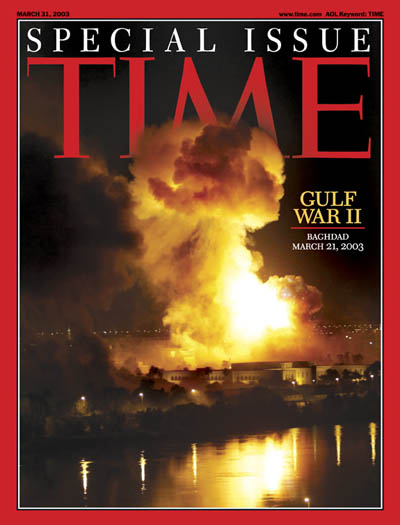
Gulf War II

21 March 2003, Iraq: The smoke rose above Baghdad in plumes of thick, black soot, carrying with it the ashes of a dying regime. The nights were full of fire and noise, as thousands of Tomahawk missiles and smart bombs crashed into their targets, sending up balloons of searing orange flame into the night sky. In the light of day, calm descended on the city’s streets, and the silence was pierced only by the crackle of burning buildings and the wail of emergency sirens. Iraqi officials angrily prevented reporters from venturing near the scenes of destruction, but word spread quickly among the hardened citizens of the city what exactly had been destroyed. Three days into the American war on Saddam Hussein, the soaring government buildings and opulent palaces that once stood on the banks of the Tigris River were gone. Even if Saddam and his most trusted aides somehow managed to survive a bombing campaign expressly designed to kill them, their tyranny appeared ready to crumble with the foundations of their fortresses. It seemed to be only a matter of time.
 

About i-i